If you're feeling heavier and flatter now the nights are drawing in, and about as motivated as a cat in the rain, you're not broken. You're just a person living through a British winter. It's dark when you get up, dark when you finish work, and the sofa starts looking like a very reasonable life choice.
I see it every year, with clients and with myself. Energy dips, routines wobble, and the little voice that says "I'll start again in January" gets louder. So let's talk about why winter can feel harder, and the one thing that helps more than any fancy plan: other people.
Why winter feels harder
You don't need a science degree for this bit. A few simple things stack up:
- Short days and less light. Here in Cumbria we can go weeks where you barely see the sun on a weekday. Less light tends to mean less energy, and that's completely normal.
- Less movement. When it's cold and wet, we walk less, skip the gym more and sit more. Moving less usually means feeling flatter, which means moving less. Fun little loop, that.
- More time on your own. Fewer evenings out, fewer chats on the street, more nights in. Without noticing, you can go days without a proper conversation.
- Comfort habits. More takeaways, more scrolling, later nights. None of it's a crime, but it all adds up.
Put that together and it makes total sense that things feel heavy. It's not a lack of willpower. It's the season pulling you one way, and you need something gently pulling the other.

How community helps
This is the bit people underestimate. Motivation comes and goes, especially in winter. Community is what gets you through the days when motivation has clocked off early.
Accountability, the friendly kind. When someone's expecting you at a session or the Saturday walk, you're far more likely to turn up. Not because anyone will tell you off, but because you said you'd be there.
Belonging. Being around people who are working on the same stuff makes you feel less like you're the only one finding it hard. Spoiler: you're never the only one.
Someone noticing you're missing. This is a big one. A quick "haven't seen you this week, all good?" can be the nudge that gets you back out the door. When you train completely alone, nobody notices when you quietly drop off.
It makes it fun. A bit of chat, a bit of banter, someone moaning about the hills with you. It's a lot easier to keep going when you actually enjoy it.
Free communities worth trying
You don't need to spend a penny to find your people. Here are some easy options, wherever you are in the UK:
- parkrun. Free, weekly, timed 5k on Saturday mornings (and 2k junior events on Sundays). You can walk the whole thing, and plenty of people do. There's one in Carlisle, and more across Cumbria.
- Local walking groups. Lots of councils, libraries and community centres run free or low-cost health walks. Ask at your library or check your council's website.
- A WhatsApp walking group with mates. Start your own. Three friends, one regular time, one route. Done. Rain is optional (it won't be, it's Cumbria).
- Gym or leisure centre classes. If you already have a gym membership, group classes are often included. Same faces each week soon become friendly faces.
- Running or cycling clubs. Many have beginner groups and will happily slow down for newcomers.
- Online communities. Follow people who share helpful, realistic stuff rather than content that makes you feel worse about yourself.
On that last point, you're very welcome to follow along with MMR Fitness. I'm on Instagram at @mmrfitness_solutions, TikTok at @mmrfitness_, and Facebook at MMR Personal Training & Coaching. I share tips, training bits and the odd bit of honesty about my own off days. You can also join the mailing list for practical tips now and then, and keep an eye on this Educational Content blog.
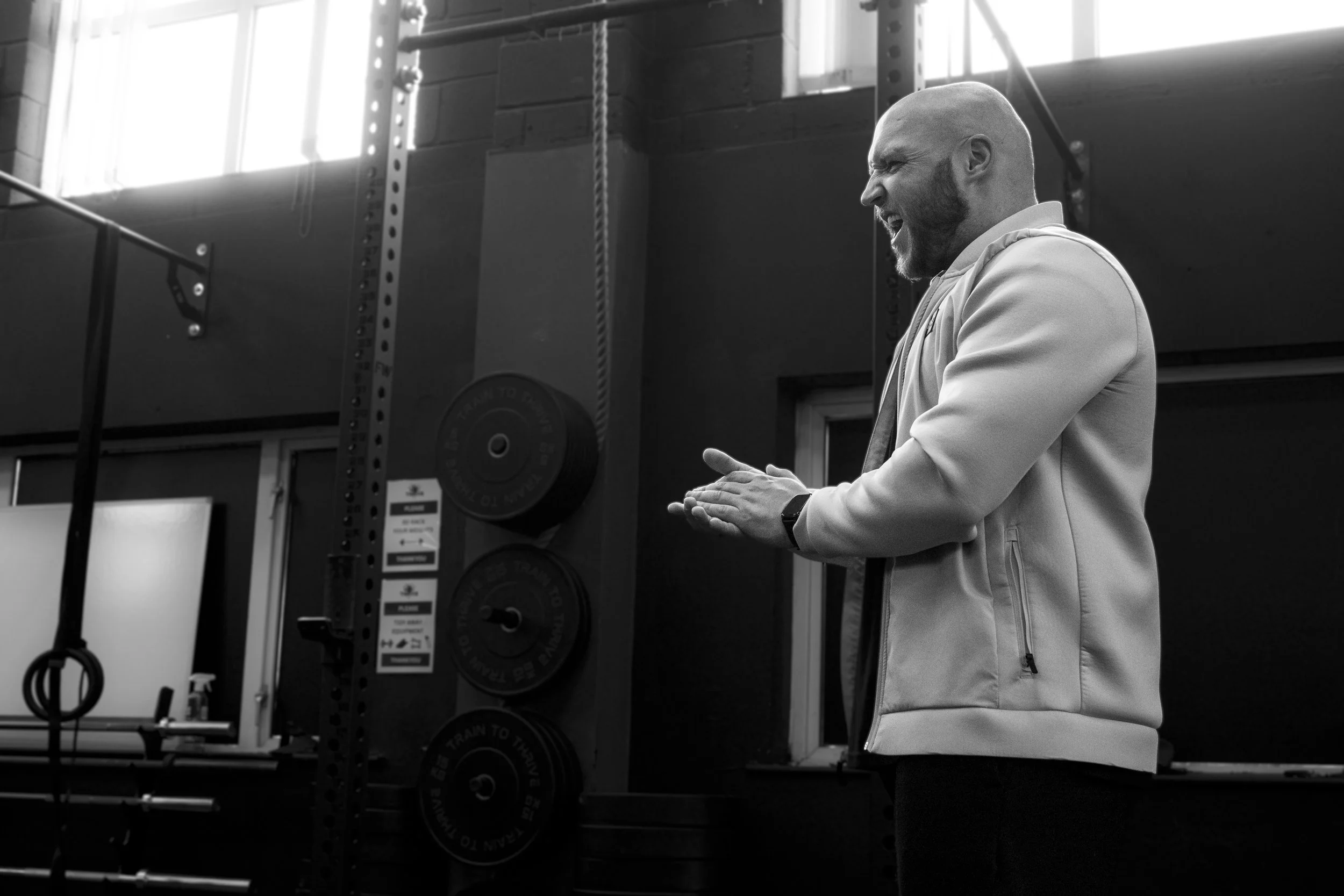
And if you're local to Carlisle, come and train with people. We've got sessions at Train To Thrive: the main session on Saturdays, Foundation on Tuesdays and the Thursday Thriller. Beginners are genuinely welcome, nobody's judging, and the hardest part is walking through the door.
Small steps for a heavy week
When you're feeling flat, big plans feel impossible. So don't make big plans. Pick one or two of these:
- Walk with someone. Ten or twenty minutes, ideally in daylight. Lunchtime walks are gold in winter.
- Message one person. "Fancy a walk Saturday?" or just "How's your week going?" Connection works both ways.
- Show up to one thing. One class, one parkrun, one session. You don't have to love it. You just have to go once.
- Lower the bar. A short session beats a skipped one. If you're nervous about the gym itself, my gym confidence guide for beginners walks you through it.
- Look after the basics. Get outside when it's light, try to keep a regular bedtime, and eat proper meals. If you want a hand with that last one, I've written about keeping your meals simple with enough protein.
None of this needs to be perfect. On a heavy week, "I went for one walk with a mate" is a genuine win. Take it.
You don't have to do winter on your own
If you'd like a bit more structure, my guides are all on the Guides page. They're written in plain English and built for beginners, so there's nothing to feel daft about. And if you fancy useful tips landing in your inbox now and then, join the mailing list. No spam, no pressure.
Winter's long, but it's easier with company. Find your people, and keep showing up, even if it's slowly.
A quick note: this is general wellbeing information, not medical advice. If it feels like more than the winter blues – your mood stays low for weeks, anxiety feels severe, or you're having thoughts of self-harm – please speak to your GP, call NHS 111, or contact Samaritans free on 116 123, any time, day or night.
Mateusz Rys, MMR Fitness