By Mateusz Rys, MMR Fitness
Here's something I've learned from years of coaching: most people don't fall off because they had a bad plan. They fall off because they stopped turning up.
The plan was fine. The intentions were brilliant. Then a busy week happened, or a cold, a late night, a rubbish day at work, and one missed session became three, then three became "I'll start again on Monday". Sound familiar? You're in very good company. It happens to almost everyone, me included.
So let's talk about the least glamorous, most important skill in fitness: just showing up.
Why showing up beats motivation
Motivation is great. It's also completely unreliable. It turns up when it fancies, usually on a sunny Sunday when you've just watched an inspiring video, and then disappears on a wet Tuesday in Carlisle when it's dark at half four.
If your training depends on feeling motivated, it'll only happen on the good days. And there aren't enough good days in a year to get you where you want to go.
Showing up works differently. It's not about how you feel, it's about what you do. And here's the bit people don't expect: motivation often comes after you start, not before. Plenty of times you'll drag yourself in feeling flat and leave feeling miles better. Rarely does anyone finish a walk or a session and think, "Well, that was a mistake."
The other reason consistency wins is simple maths. A "perfect" week followed by three weeks off adds up to far less than four steady, average weeks. Results come from the stuff you do most of the time, not the occasional heroic effort. Boring? A bit. Effective? Massively.
What showing up actually looks like on a bad day
This is where a lot of beginners trip up. They think showing up means doing the full session, at full effort, every single time. So when they can't do that, they do nothing.
Showing up just means doing something. On a low day, lower the bar:
- Do 20 minutes instead of an hour. Warm up, do your two or three main exercises, go home. That still counts.
- Do half a session. Planned four exercises? Do two. Planned three sets? Do two. Still counts.
- Go for a walk. Twenty minutes round the block, a stroll along the river, whatever's close. Absolutely counts.
- Do a few minutes at home. Some squats to a chair, a few press-ups against the kitchen counter, a stretch. Yep, counts.
- Just get there. Some days the deal is "I'll go and do the warm-up, and if I still feel rubbish, I'll leave." Most of the time, you won't leave.
The aim on a bad day isn't progress, it's keeping the habit alive. You're casting a vote for being "someone who turns up", and that identity is worth more than any single workout.
If the thing stopping you is nerves about walking into the gym itself, have a read of my gym confidence guide for beginners. It covers the bits nobody tells you.
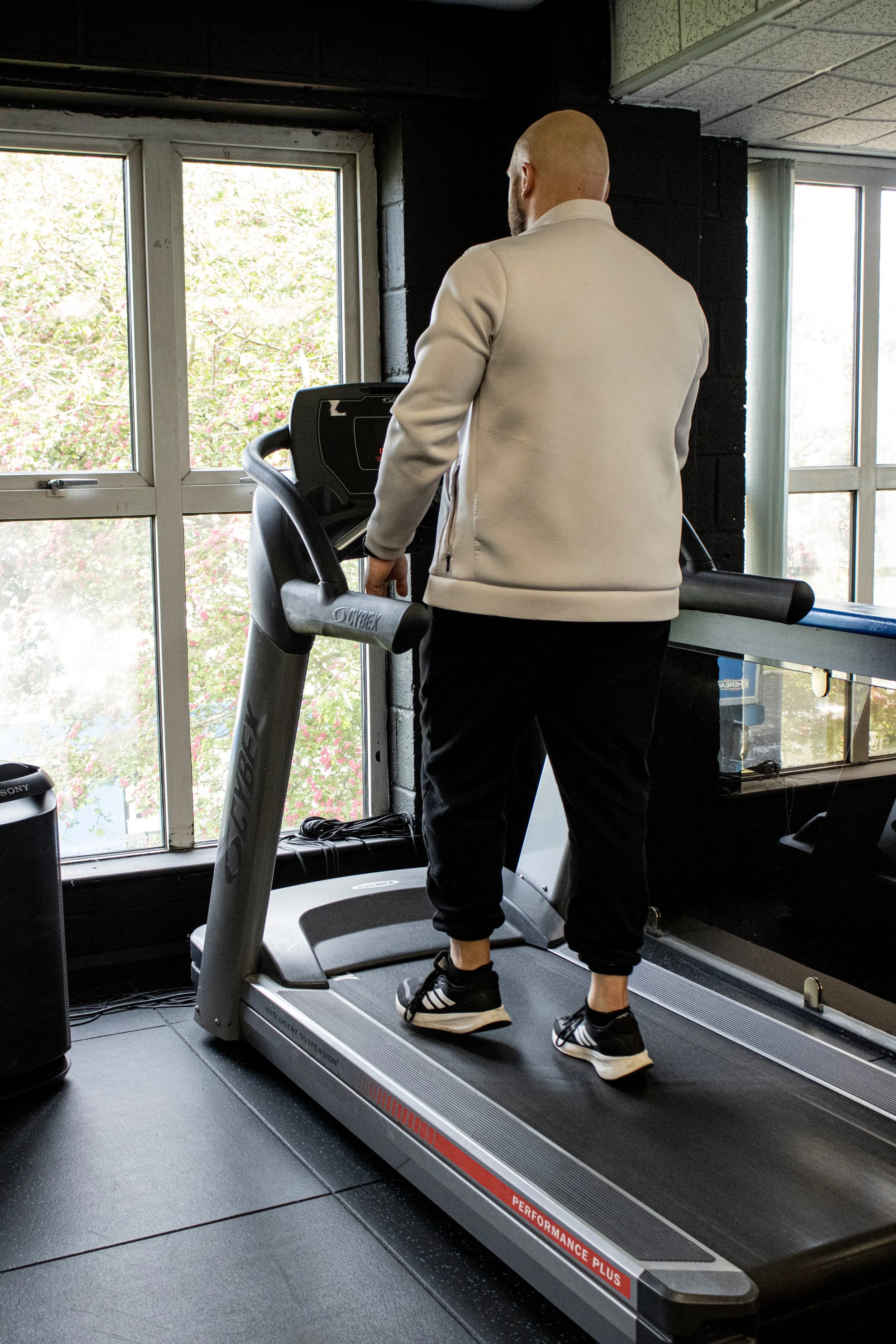
Practical tips to keep turning up
You don't need superhuman discipline. You need a few simple systems that make showing up the easy option.
1. Schedule it like an appointment. Pop your sessions in your calendar with a day and time. "I'll train sometime this week" rarely happens. "Tuesday, 6pm" usually does. You wouldn't skip a dentist appointment because you weren't in the mood (well, you might want to, but you'd go).
2. Stack it onto something you already do. This is called habit stacking, and it's simpler than it sounds. Attach your new habit to an existing one: "After I drop the kids at school, I go for a 20-minute walk," or "When I get home from work, I put my gym kit on before I sit down." Once you're sat on the sofa, it's game over, so don't sit down first.
3. Make it easy to start. Pack your bag the night before. Leave your trainers by the door. Have a plan written down so you're not standing in the gym wondering what to do. The fewer decisions between you and starting, the better.
4. Get some accountability. Tell a mate, train with someone, or book into a group session. When someone's expecting you, you're far more likely to turn up. I wrote more about why community makes winter easier if you want ideas, including free options.
5. Imperfect beats skipped, every time. A wobbly 20-minute session is better than the perfect hour you didn't do. Stop waiting for the right week. There isn't one.
6. Never miss twice. Missed a session? Fine, life happens. Just try not to miss the next one too. One miss is a blip; two starts becoming a new habit.
7. Look after the basics. Sleep, water and decent meals make showing up a lot easier. If food's the bit you overthink, here's a simple guide to how much protein you actually need, without the faff.
8. Track the turning up, not just the results. Tick off each day you did something. A row of ticks on the fridge is surprisingly motivating, and it reminds you that you're doing better than you think.

Small, steady and still going
If you take one thing from this post, let it be this: you don't need to be perfect, you just need to keep coming back. The people who get results aren't the ones who never have off weeks. They're the ones who don't let an off week turn into an off year.
If a bit of structure would help, my guides are all on the Guides page. The Busy Week Training guide is built for exactly those weeks when time and energy are tight, and the Beginners Guide is a good place to start if you're not sure where to begin. Both are written in plain English, with no jargon to wade through.
You can also join the mailing list for practical tips now and then. No spam, no pressure, just useful bits to help you keep turning up.
And if you're local and fancy someone in your corner, have a look at personal training in Carlisle. Beginners very welcome.
Now go and show up. Even if it's just for 20 minutes.
A quick note: this is general fitness education, not medical advice. If you have an injury, a health condition or any concerns, please check with your GP or a qualified health professional before starting or changing an exercise routine.
Mateusz Rys, MMR Fitness